Mold Testing
Certified inspections to identify suspected mold, moisture conditions, and the right next steps before any cleanup begins.
Serving Reno, Nevada & surrounding areas
24/7 Emergency Response
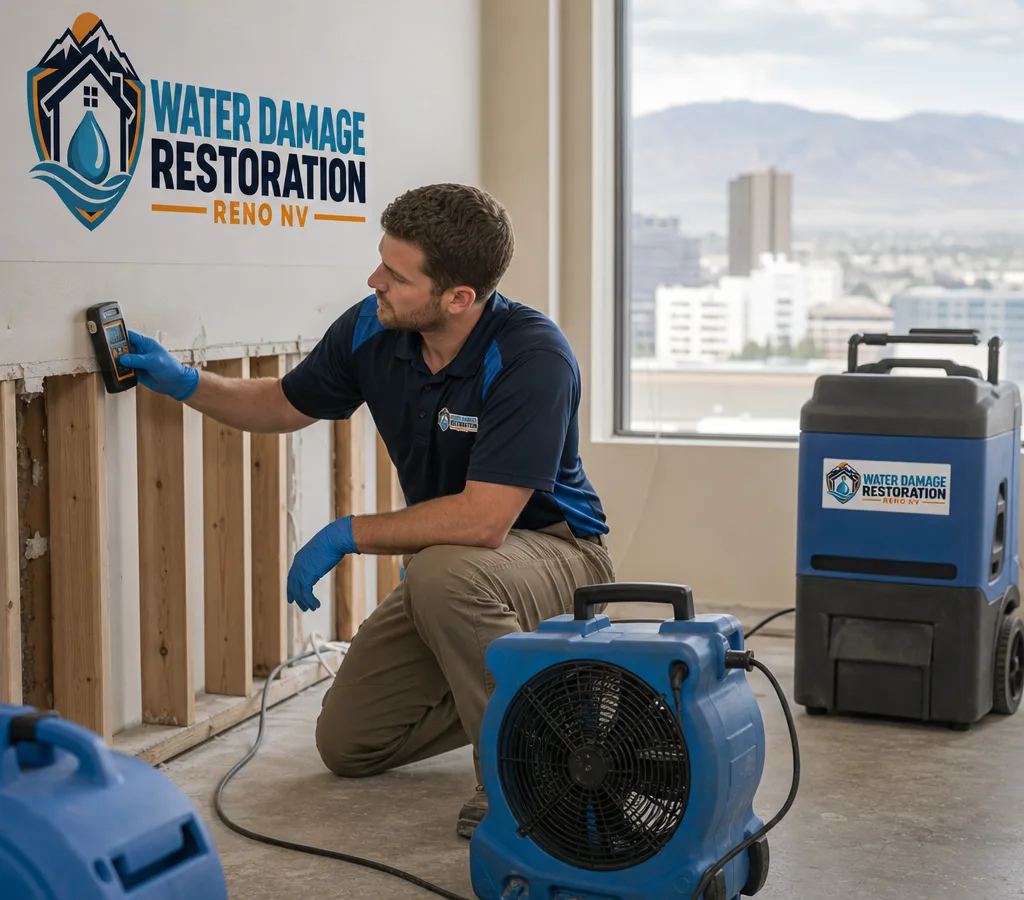
Reno water damage cleanup and drying
Fast cleanup and drying to stop the spread, protect materials, and get your Reno home or business back to normal with a clear scope before work starts.
Assess, extract, dry, restore
When water gets into building materials, time matters. Water Damage Restoration Reno NV provides cleanup and structural drying focused on two things: stopping additional damage and documenting what it takes to return the space to pre-loss condition.
We start by finding where water has traveled, not just what you can see. That means checking baseboards, flooring edges, cabinets, and wall cavities, then setting a drying plan that matches the materials and how wet they are. In Reno, quick temperature swings and low humidity can dry surfaces fast while moisture stays trapped deeper in the assembly. If the structure is not dried correctly, you can end up with warped floors, delamination, swollen trim, or hidden microbial growth.
Whether it is a burst pipe, a water heater leak, a dishwasher overflow, or storm-driven flooding, our Reno NV restoration team handles water extraction, structural drying, removal of unsalvageable materials, and repair coordination so the project does not stall midstream.
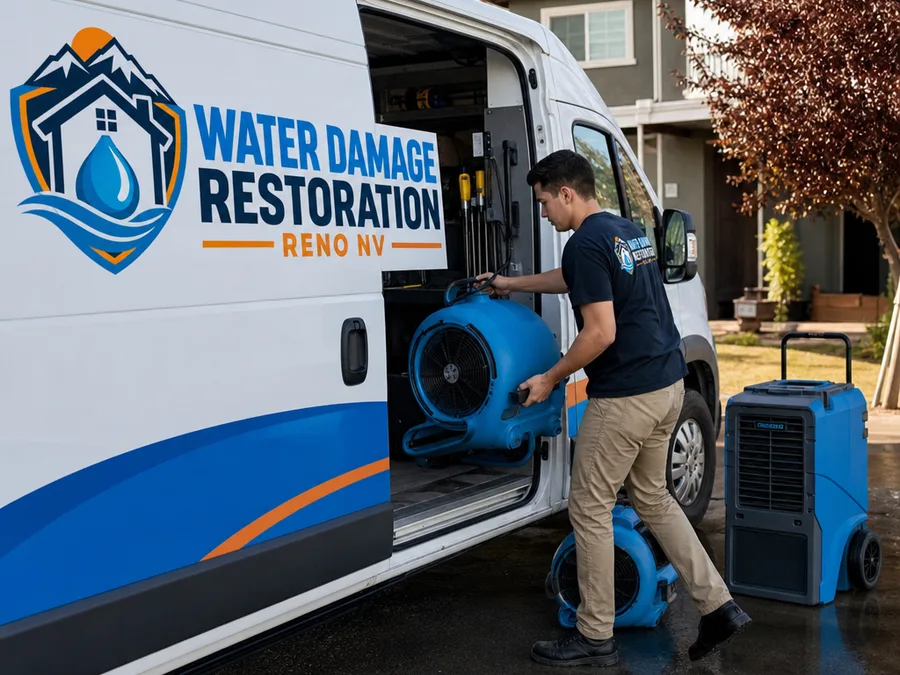
Complete property restoration support
Certified inspections to identify suspected mold, moisture conditions, and the right next steps before any cleanup begins.
Containment, removal, and detailed cleaning for affected areas, with moisture control steps to reduce the chance of recurrence.
Targeted removal and cleanup of mold-affected building materials and contents, followed by drying and verification checks.
Smoke residue cleanup, odor control, and repair planning after a fire so the property can be safely used again.
Practical mitigation support
We prioritize removing standing water, then placing air movement and dehumidification where it actually drives drying, not just where it is convenient.
We use moisture meters and targeted checks to track wet areas behind finishes and confirm when materials are dry enough to repair.
If drywall, insulation, or flooring cannot be salvaged, we remove only what is required for access and drying, then plan the rebuild.
You get a written scope and practical explanations of what is wet, what can be saved, and what the next steps are.
From slab-on-grade spaces to older homes with crawlspaces, we tailor drying and repair planning to the structure in front of us.
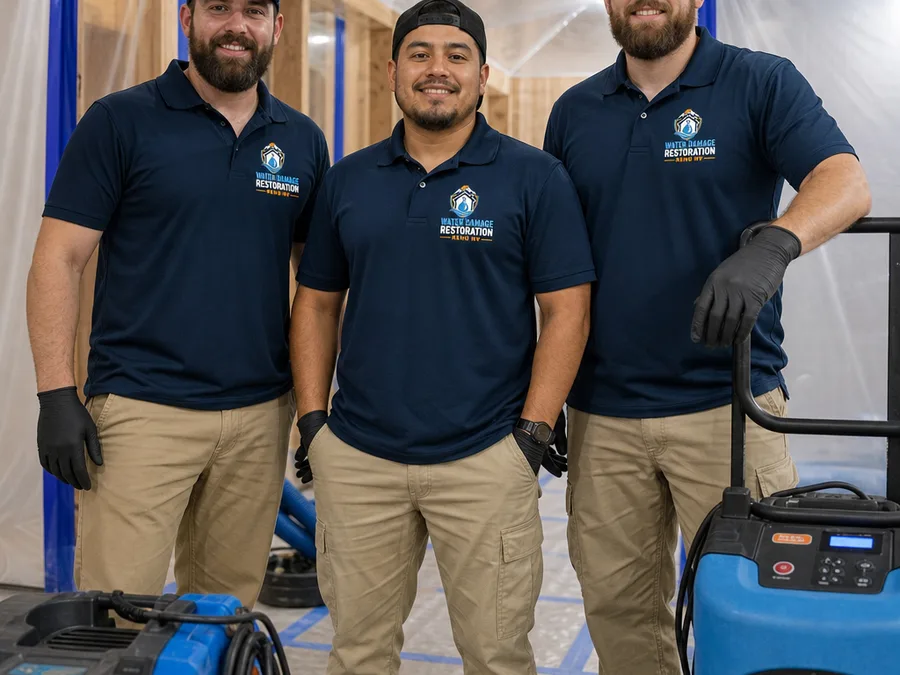
Local restoration support
Water Damage Restoration Reno NV is a local restoration company serving Reno, Nevada (89507). Our work is centered on water damage repair in Reno: assess the source and category of water, protect the unaffected parts of the building, remove what cannot be dried, and dry the structure in a controlled way before repairs.
Customers hire us when they want the project handled like a trade, not a guessing game. We explain what we find, what we recommend, and why. If you are dealing with a sudden leak or an ongoing moisture problem that finally showed up as staining, swelling, or odors, we will help you stabilize the situation and move toward a clean repair plan.
The goal is simple: stop the damage, dry it correctly, and leave you with documentation you can rely on when making repair and insurance decisions.
Planning your restoration
Water damage restoration in Reno typically costs $1,200 to $6,500 for most residential jobs. Where a project lands in that range depends on how much water moved, which materials absorbed it, and how quickly drying started.
| Type of loss | Typical cost | What it usually involves |
|---|---|---|
| Small, contained loss | $1,200 – $2,500 | Light water extraction and controlled drying in one area, with no material removal |
| Large loss | $3,500 – $6,500+ | Removal of wet drywall or flooring, multiple dehumidifiers, and rebuild coordination |
Final cost depends on how far water traveled, material types (drywall, insulation, hardwood, tile), access to wet cavities, the water category, and how long it sat before drying started. Exact pricing is confirmed after an on-site inspection and moisture mapping.
From source control to repair planning
A measured sequence keeps mitigation focused, documents progress, and creates a clear path into repairs.
Request Emergency ServiceWe identify the source (supply line, drain, appliance, roof intrusion) and confirm it is stopped so restoration work is not fighting active water.
We check walls, floors, and adjacent rooms to find hidden migration and set a drying plan based on materials and readings.
Standing water is removed and impacted contents are moved, protected, or staged so drying can be effective and safe.
Air movers and dehumidifiers are placed to drive evaporation and capture moisture, with follow-up checks to confirm progress.
If materials are not salvageable, we remove them, clean affected areas, and provide a clear scope to move into repairs.
If you are seeing bubbling paint, soft drywall, warped flooring, or musty odors after a leak, the next step is an on-site assessment and moisture map so repairs are based on real readings.
Call for Emergency HelpLocal property knowledge
We provide water damage cleanup and structural drying across Reno, with repair planning that fits the way different parts of the city are built.
Request Emergency ServiceOld Southwest Reno: Older homes can hide water in lath-and-plaster walls, layered flooring, and tight crawlspaces.
Northwest Reno: Many properties have mixed elevations and multi-level layouts, so water can travel to lower rooms.
South Reno: Newer construction still sees appliance and supply-line failures; quick moisture mapping helps prevent damage.
Midtown Reno: Smaller footprints and shared walls in some buildings can make containment and documentation important.
Downtown Reno: Commercial and multi-unit spaces often need careful equipment placement and access planning.
Customer proof
“We had water spread under the flooring and into the baseboards. They explained what needed to come out, set drying equipment the same day, and kept checking moisture until it was ready for repairs.”
J. R.
“The written scope and photos made it much easier to make decisions with our adjuster and contractor. Communication was straightforward the whole time.”
Melissa K.
“They found moisture behind a wall that we would have missed. The extra inspection saved us from patching it up too soon.”
Daniel S.
Practical answers before work begins
We prioritize active leaks and standing water because early extraction and drying reduces how much material has to be removed. Once you reach out, we will ask where the water came from, how long it has been present, and what areas are affected so we can plan the right inspection and equipment.
We handle the full restoration workflow in Reno NV, including inspection, water extraction, structural drying, removal of unsalvageable materials, and a repair plan. If you already have a contractor, we can also provide drying documentation and a clear scope that supports the rebuild.
Removal depends on readings and material type, not appearance alone. If wet drywall or insulation cannot dry in place or is contaminated, we recommend controlled removal to access cavities and prevent lingering moisture.
Yes, we provide documentation commonly requested for insurance claims, such as photos, moisture readings, and a written scope of work. Coverage decisions come from the carrier, but clear documentation helps the process move faster.
If it is safe, stop the water source and shut off power to wet areas, then move small items away from the affected zone. Avoid running household fans directly at saturated materials if the water source is unknown or potentially contaminated; it can spread moisture and particulates before containment is planned.
Yes, but the approach changes based on the category of water. Clean water losses can sometimes be dried with minimal removal, while gray or black water situations typically require removal of affected porous materials and detailed cleaning before drying and repairs.
Start with a clear assessment
Tell us what happened and what areas are wet. We will schedule an on-site inspection, map moisture, and give you a clear scope for drying, removal, and the repairs that follow.