A written scope before demolition
You receive clear documentation of the affected areas, the containment approach, what materials are likely to be removed, and what the next steps look like.
Serving Reno, Nevada & surrounding areas
24/7 Emergency Response
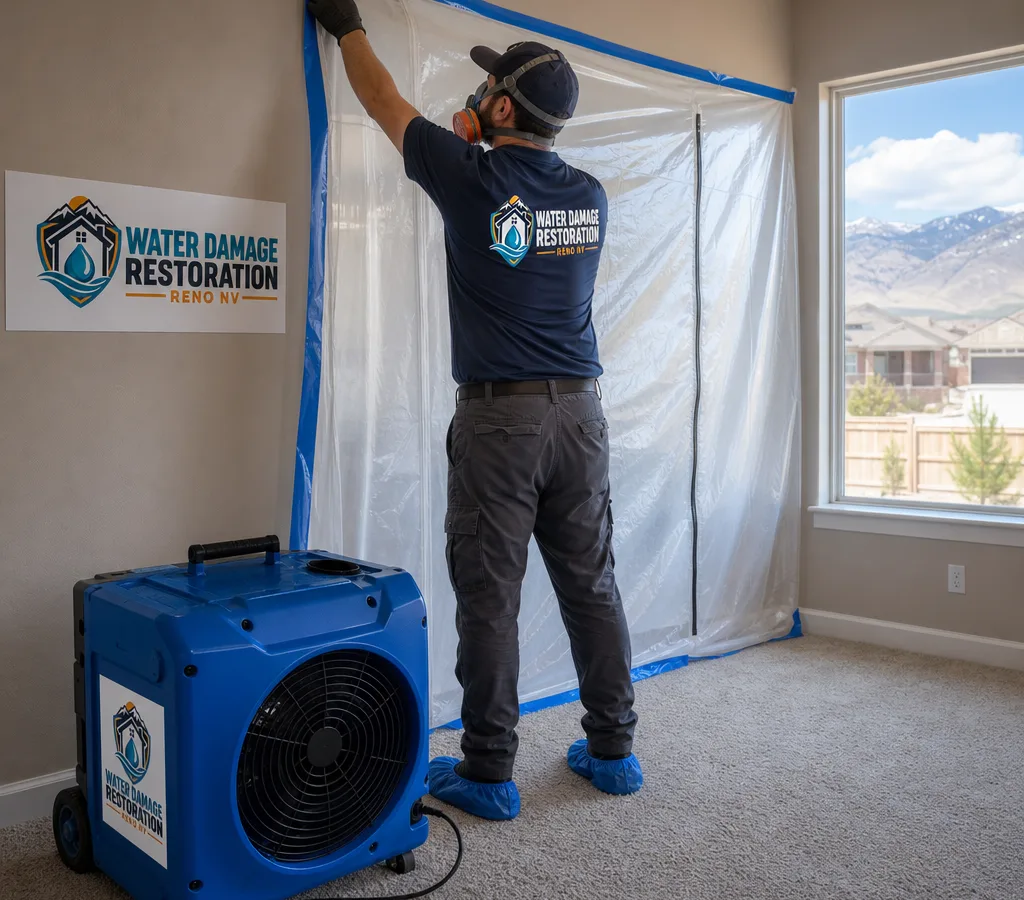
Mold removal in Reno, Nevada
If you smell something musty, see staining, or have had a recent leak, our certified team contains the area, removes contaminated materials safely, and leaves your space clean and ready for repairs.
Source-first mold removal
Effective Reno mold removal is less about bleaching what you can see and more about stopping what you cannot. Mold grows when building materials stay damp long enough, so full mold remediation in Reno has to address moisture first, then remove or clean affected materials under containment so spores do not spread through the home or business.
In Reno and the Truckee Meadows, we often see mold tied to plumbing leaks under sinks, slow refrigerator supply-line leaks, water heater drips, roof or flashing issues, and wet building cavities after storms. Older homes with multiple remodel layers can hide damp drywall and insulation for weeks. Newer buildings can still develop mold if a small leak stays trapped behind baseboards or inside a wall.
Water Damage Restoration Reno NV handles mold inspections and mold removal for residential and commercial properties in Reno, NV 89507. If there is an active leak or recent water event, stabilizing the area quickly matters because mold risk rises as materials stay wet. Start with local water damage restoration specialists in Reno when the moisture source is still active.
Contain, remove, clean, dry
A proper mold removal plan is built around controlled work conditions and clear endpoints. Our mold removal process typically includes:
You should expect straight answers about what needs to come out versus what can be cleaned, and why. When containment is done right, most of the disruption stays limited to the work zone rather than the entire building.
If the mold is connected to a recent water loss, our team also handles related moisture stabilization work through Water Damage Restoration.
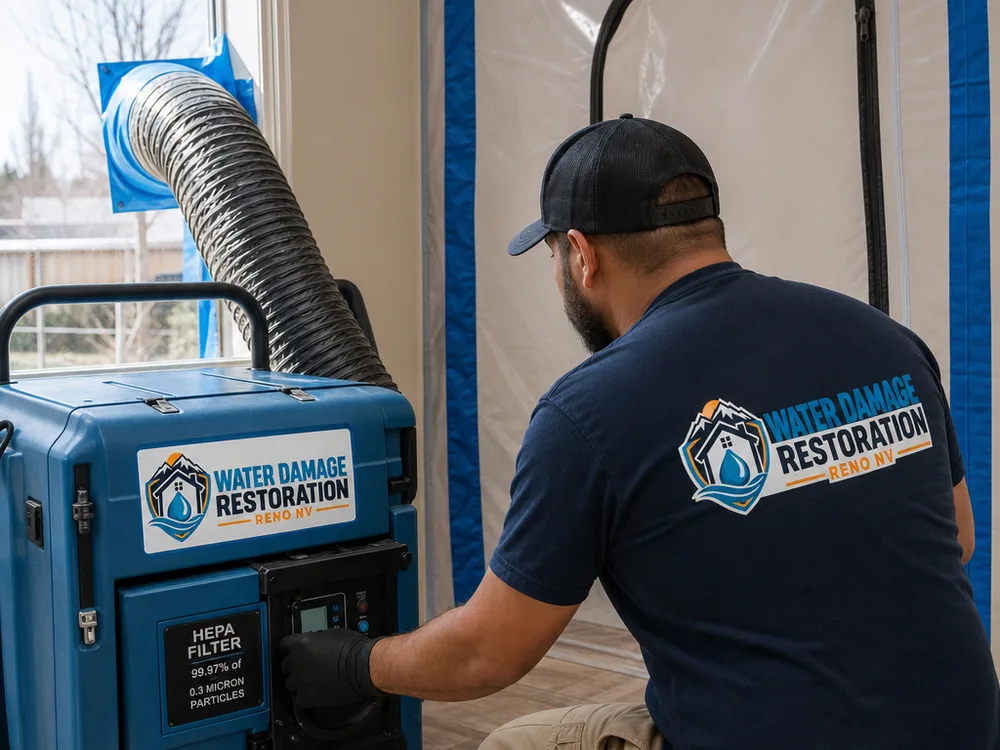
Controlled work with clear records
You receive clear documentation of the affected areas, the containment approach, what materials are likely to be removed, and what the next steps look like.
Small, isolated areas may need a tight single-room containment. Larger or multi-room problems may require multi-zone containment and staged work to keep the property usable.
We use HEPA filtration and detailed cleaning so the job is not just a fresh coat of paint over a contaminated surface.
We plan the work to reduce cross-contamination risks, especially when mold is near returns, closets, or frequently used rooms.
We document conditions and work performed so you can coordinate repairs, property management, or insurance conversations with fewer surprises.
A controlled removal sequence
Each phase limits spread, addresses damaged materials, and confirms that the work area is ready for the next repair step.
Request Emergency ServiceWe identify where mold is visible, where moisture is likely trapped, and any immediate health or safety issues. If the situation suggests a larger hidden problem, we explain what that means before work begins.
We isolate the work area and run negative air with HEPA filtration when appropriate. This keeps dust and spores from spreading into adjacent rooms and hallways.
Contaminated porous materials are removed, double-bagged, and handled to limit disturbance. Remaining structural surfaces are HEPA vacuumed and cleaned using methods suited to wood, concrete, or other substrates.
We dry the affected cavities and surfaces and confirm moisture levels are trending back to normal for the material. If the source is still active, we stop and recommend the correct repair sequence.
We complete a final detailed cleaning of the containment area, remove barriers carefully, and walk you through what was done and what a rebuild typically requires.
Scope determines the investment
Mold removal in Reno typically costs $900 to $6,000+, depending on how far the contamination spread and how much material must be removed under containment.
| Scope | Where it lands | What it usually involves |
|---|---|---|
| Small, accessible area | Toward the low end | Limited growth in a bathroom or under a sink, straightforward access |
| Multi-room or wall cavity | Toward the high end | Wall-cavity mold removal with drying and more extensive demolition |
Final price depends on the affected square footage, whether drywall or insulation must be removed, how hard the area is to access—crawlspaces and attics take longer—and whether the HVAC system or multiple levels are involved. Exact costs are confirmed after an on-site inspection and a written scope.
High-desert building conditions
Mold work in Reno often comes down to where moisture hides. In older neighborhoods like Old Southwest, remodels over decades can leave mixed materials and patchwork plumbing that leak slowly behind cabinets or plaster and drywall transitions.
In areas with many attached walls and shared building systems, like parts of Midtown with multi-family properties, containment planning matters because airflow and shared chases can move dust farther than people expect.
In Northwest Reno and into the foothill areas, crawlspaces and venting details can complicate access and drying, especially when insulation has been wet for an extended period. South Reno properties with newer construction can still see problems from small supply-line leaks or poorly sealed shower transitions where water runs into wall cavities.
If you have visible staining, recurring condensation, or a musty odor that returns after cleaning, treat it as a moisture investigation. The goal is to remove the contaminated material and make the area dry enough that mold cannot re-establish.
Customer proof
“We had a musty smell that kept coming back after a slow leak under the kitchen sink. They showed us where the moisture was, sealed the area properly, removed the damaged cabinet materials, and left everything clean and contained. The air in the house was noticeably better afterward.”
Tanya R.
“Our tenant reported mold in a closet after a roof issue. The team documented everything, explained what needed to be removed versus cleaned, and finished without spreading dust through the hallway. The written scope made repairs straightforward.”
Mark D.
Practical answers before removal
Start time depends on current workload, but mold problems tied to active moisture are typically prioritized because conditions can worsen while materials stay damp. After an initial assessment, you will get a clear plan for containment, removal, and drying so you can decide on timing and occupancy.
Testing is not required for every job because visible growth and moisture conditions can be enough to justify removal, but testing can help when the source is unclear or documentation is needed. If sampling makes sense for your situation, we can explain options and how results should be interpreted alongside what is visible on site.
Sometimes, yes, if growth is limited to non-porous or semi-porous surfaces and the material is structurally sound and dryable. If drywall, insulation, or carpet pad is contaminated, removal is often the safest approach because those porous materials are difficult to clean reliably once growth is established.
It can be, when the work area is properly contained and air filtration is set up for the scope of the job. We discuss any occupancy concerns up front, including which rooms should stay off-limits, how long drying equipment may run, and when it is reasonable to re-enter the contained area.
Mold removal requires the moisture source to be corrected, but the specific repair can vary by cause—plumbing, roofing, exterior intrusion, or mechanical issues. We document likely sources and the sequence of work so the right repair happens before reconstruction and finishes go back in.
Avoid scrubbing or disturbing the area because that can spread spores into the air and adjacent rooms. If it is safe, stop ongoing water—for example, shut off a fixture supply—and keep pets and children away from the affected space until an assessment is completed.
Safe containment and a clear scope
Tell us what you are seeing and where it is happening. We will inspect the area, explain what can be cleaned versus removed, and provide a written scope that prioritizes safe containment and a dry, healthy finish.