Fast stabilization when time matters
If materials are wet or mold is actively spreading, the first priority is isolating the area, starting drying, and preventing cross-contamination to hallways, adjacent rooms, and shared commercial spaces.
Serving Reno, Nevada & surrounding areas
24/7 Emergency Response
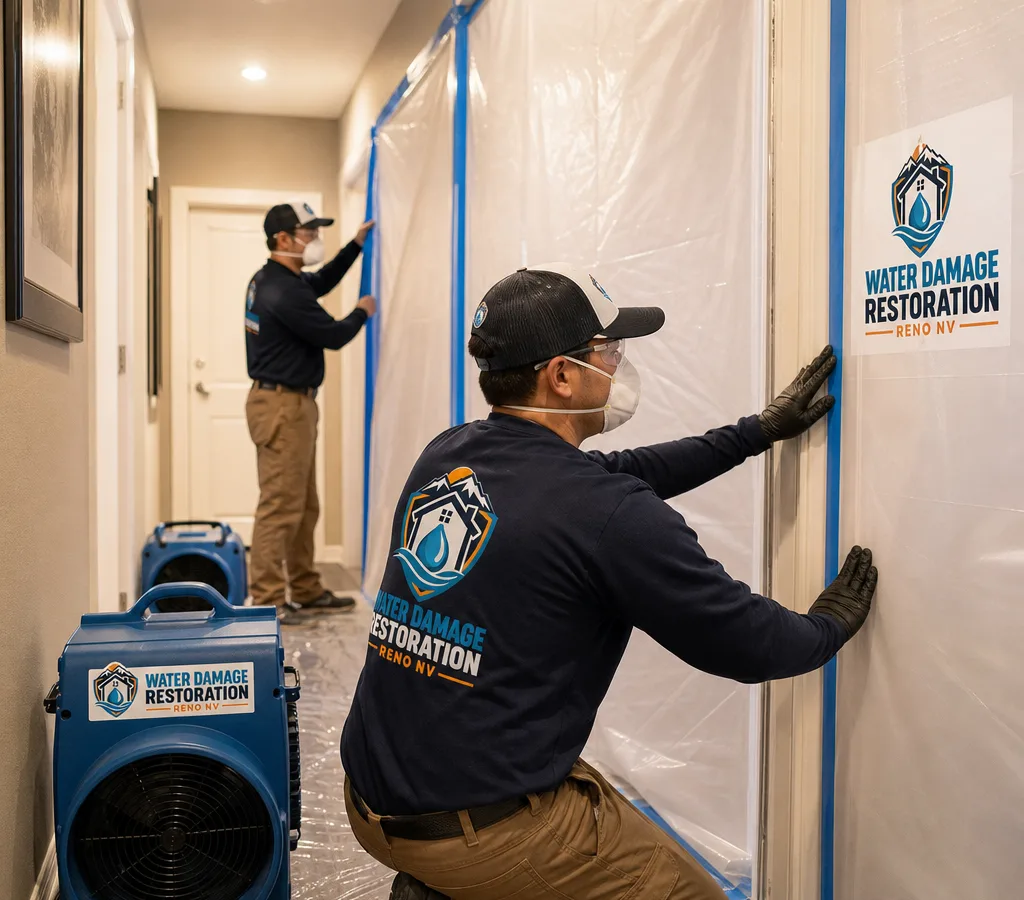
Mold remediation in Reno, Nevada
If you have visible growth, a musty odor, or a recent water issue, get a clear inspection and a contained cleanup plan that protects your air, your belongings, and your schedule.
Contain the problem and correct the cause
Mold problems usually show up the same way: a lingering musty smell, discoloration on drywall or baseboards, or allergy-like symptoms that seem worse indoors. In Reno, mold often follows a plumbing leak, a roof issue, a wet crawlspace, or water that sat too long after a storm or appliance failure. Whatever the trigger, the fix is not just spraying a product and hoping it stays away.
Water Damage Restoration Reno NV provides mold remediation Reno property owners can trust for careful evaluation, source control, and professional removal. The goal is simple: remove impacted materials when necessary, clean and treat salvageable surfaces, and keep spores from spreading to clean areas.
If your mold concern started after water intrusion, it can help to start with a broader assessment of drying and damage scope. Many clients begin by reviewing our water damage restoration services in Reno first, then move straight into remediation once moisture conditions and affected areas are understood.
Containment, cleaning, moisture control
A credible remediation job is built around containment and verification, not shortcuts. You should expect a written scope that answers three questions: Where is the mold, why did it grow, and what materials need to be removed versus cleaned.
What we do on a typical mold remediation job
What we avoid
Covering mold with paint, fogging without containment, and doing demolition that spreads dust through the HVAC system are common reasons problems get worse rather than better.
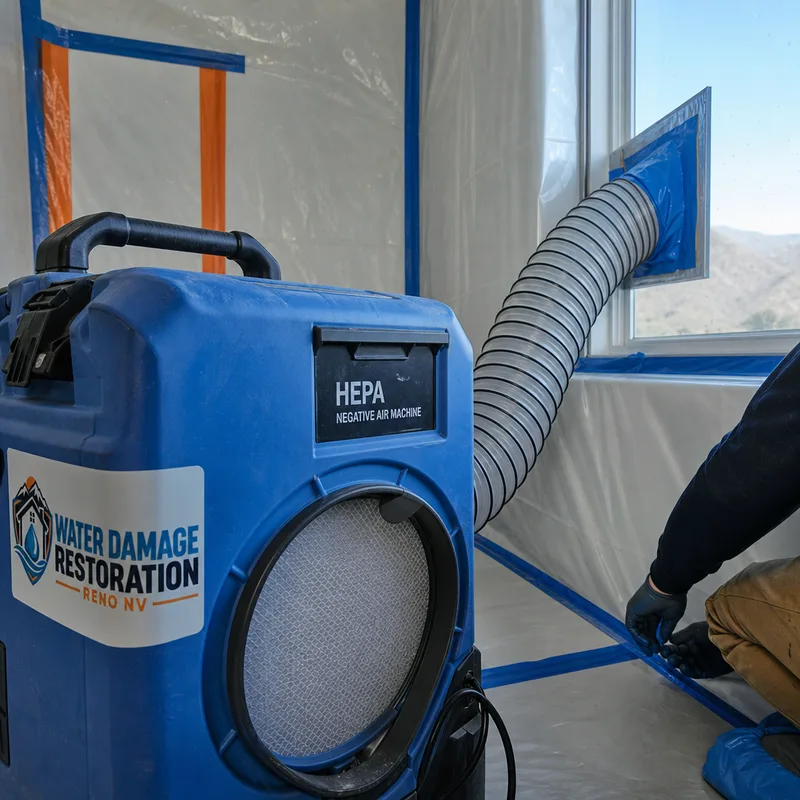
Practical protection for your property
If materials are wet or mold is actively spreading, the first priority is isolating the area, starting drying, and preventing cross-contamination to hallways, adjacent rooms, and shared commercial spaces.
Not every stain needs demolition, and not every surface is salvageable. We explain which materials can be cleaned, which should be removed, and why.
Containment layout, access paths, and work sequencing matter when people need to keep living or working on site. We plan for dust control, odor management, and practical daily use.
You get a straightforward scope of work and condition notes that help with landlord coordination, insurance conversations, or real estate deadlines.
Mold remediation is only durable when moisture is addressed. We help you pinpoint likely sources and the next steps to keep the area dry.
From inspection through verification
A controlled sequence limits cross-contamination, removes affected materials, and confirms the space is ready for the next step.
Request Emergency ServiceWe walk the affected areas, look for visible growth and water staining, and check likely moisture pathways. We also review any recent leak, overflow, or odor timeline to narrow down the source.
You receive a clear plan for what spaces are included, what materials are affected, how we will isolate the area, and what the work sequence looks like.
We install plastic barriers, protect floors, and set HEPA-filtered negative air as needed. The goal is to keep spores and dust out of clean rooms and common areas.
We remove unsalvageable porous materials under containment, HEPA-vacuum, and clean framing and other structural components where appropriate. Contents are handled based on material type and condition.
We confirm the area is clean and drying properly, then complete a final walkthrough. When an independent clearance test is required, we coordinate timing so the space is ready for sampling.
Scope determines the investment
Mold remediation in Reno typically costs $1,500 to $6,500 for most projects, with small contained areas closer to $1,000 to $2,500 and larger multi-room or crawlspace work reaching $6,500 to $15,000+.
| Scope | Typical cost | What it usually involves |
|---|---|---|
| Small, contained area | $1,000 – $2,500 | Limited growth in one area with straightforward containment |
| Typical whole-job range | $1,500 – $6,500 | Removal of affected porous material, containment and treatment |
| Large multi-room or crawlspace | $6,500 – $15,000+ | Extensive removal, complex containment, drying and dehumidification |
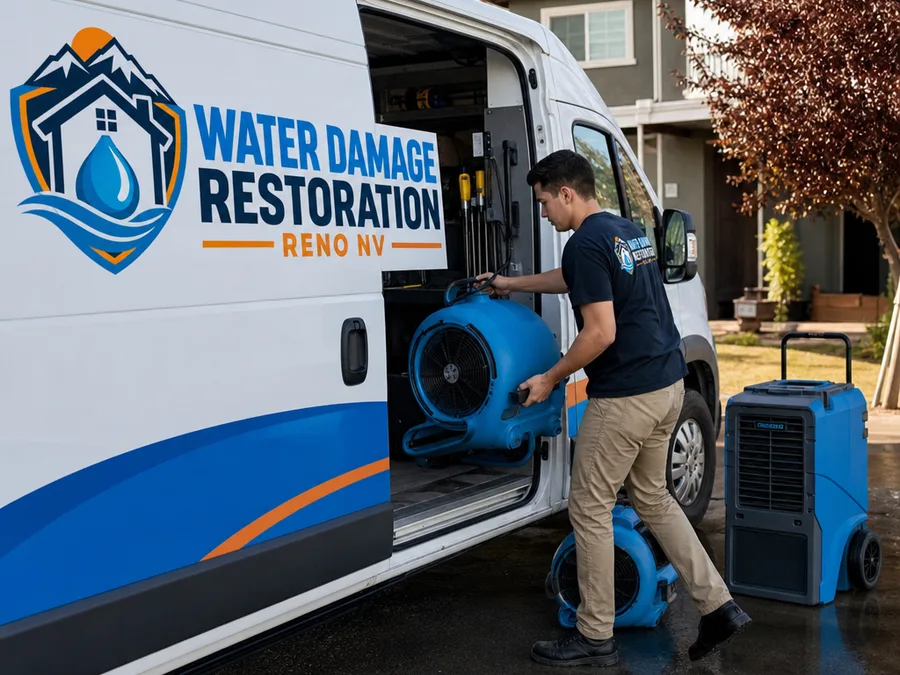
High-desert moisture conditions
Mold needs moisture. Reno's dry climate helps in many situations, but it can also hide problems until a leak has been active for a while. We often see moisture trapped behind cabinets, inside wall cavities, under flooring, or in crawlspaces where airflow is limited.
A few local realities we plan around:
If the mold resulted from a leak or overflow and materials are still wet, pairing remediation with professional drying is often the shortest path back to normal. Some clients start with an assessment of water damage restoration in Reno needs, then proceed directly into mold work once moisture conditions are controlled.
Customer proof
“They explained what had to be removed versus what could be cleaned, then built containment so the rest of the house stayed livable. The musty smell was gone after the cleanup and drying plan was finished.”
Kara M.
“We needed documentation for a tenant turnover and a tight schedule. The scope was clear, the work area stayed contained, and the final walkthrough covered what we needed for our records.”
Devon R.
Practical answers before cleanup
Most contained projects take 1 to 3 days of on-site work, then additional time if drying or reconstruction is needed. Timeline depends on how many areas are impacted, whether demolition is required, and how quickly materials dry after the moisture source is addressed.
Often you can stay home if the affected area can be fully contained and kept separate from living spaces, but it depends on the location and scope. If the growth is in a main hallway, a large open area, or involves significant demolition dust, temporary relocation may be the safer and more comfortable option.
Testing is not required for every job because visible growth with a known moisture issue can be addressed with a proper remediation protocol. Testing can be useful when you need documentation for a buyer, property manager, or insurer, or when the source and extent are unclear; in those cases we can coordinate third-party sampling and clearance.
Yes, attic and crawlspace remediation is common, but it usually requires careful access planning and stronger containment because these spaces can spread dust through openings and penetrations. The lasting fix also depends on addressing the moisture driver, such as ventilation issues, roof leaks, or ground moisture control.
Avoid disturbing the area, running fans that blow across visible growth, or moving contaminated items through clean rooms. If it is safe, stop the water source and limit HVAC use in the affected zone; we will advise on access, what to clear from the work area, and how to protect pets and sensitive occupants.
Coverage depends on the cause and your specific policy, and many policies treat long-term leaks differently than sudden events. If mold followed a documented, recent water incident, keeping photos, dates, and any mitigation notes helps; we provide a written scope and job documentation that supports the claim process when coverage applies.
Contained cleanup and moisture control
Tell us what you are seeing and where it is showing up. We will schedule an inspection, explain the containment approach, and provide a written scope with practical next steps for your Reno property.